
The Best Ways to Display Your Art Collection

Updated: May 17
A thoughtfully displayed collection does more than decorate a room. It gives shape to your taste, creates atmosphere, and allows each work to be experienced rather than simply stored or scattered. Whether you collect bold canvases, quiet works on paper, or original abstract compositions, the way you place and present them will influence how they are seen every day. The best displays make unique art pieces feel connected to the home while still giving each work the attention it deserves.
Start with the room before you start with the wall
One of the most common mistakes collectors make is treating every blank wall as a place to hang something. A stronger approach is to begin with how the room functions. Art in a dining room can invite conversation and drama, while art in a bedroom often works best when it supports calm and balance. In a hallway, rhythm and repetition matter more because the work is experienced in motion.
Take a moment to notice the architecture, furniture placement, light levels, and sightlines. Stand in the doorway and identify where the eye naturally lands. That is often the right place for a key work. Large pieces need breathing room, while smaller works usually benefit from being grouped so they read as one visual statement.
Collectors looking at original abstract art in Australia often respond to colour, energy, and texture first. That is one reason homes featuring work from Sandra Vincent Art Melbourne can feel so cohesive when the art is placed with intention rather than simply matched to a cushion or paint swatch. Good display respects both the artwork and the room.
Choose a display style that suits your collection - The best way to display your art
Not every collection should be presented the same way. Some homes suit a clean, gallery-like arrangement, while others benefit from a layered and lived-in approach. If you are still building your collection, it helps to buy unique art pieces with enough presence to hold their own, even as your interiors evolve over time.
There are a few reliable ways to display art well:
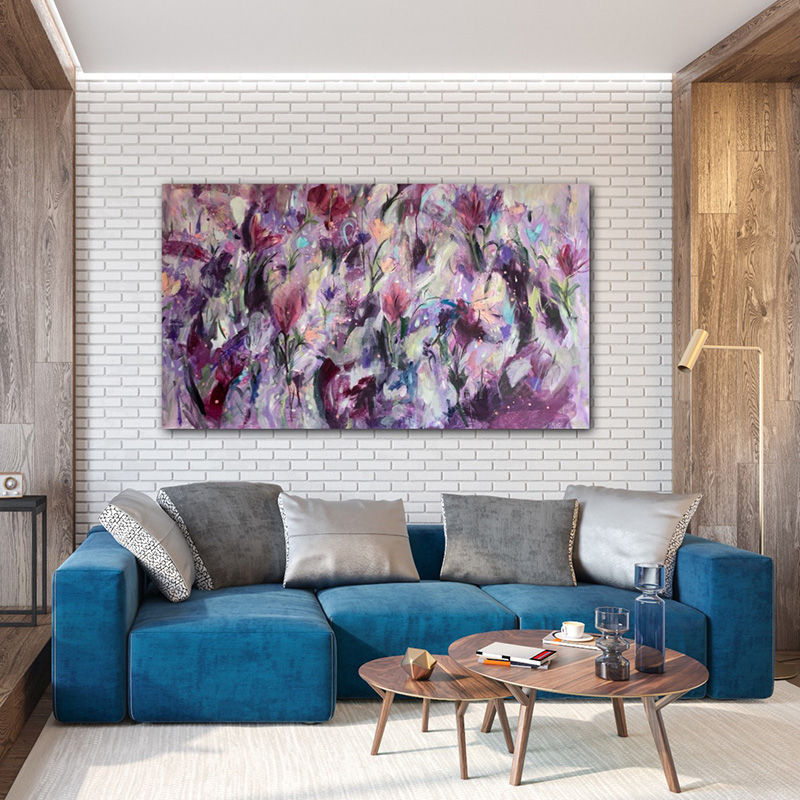
Single statement hanging: Best for large works with strong visual impact. Ideal above a console, sofa, bed, or fireplace when scale is right.
Salon-style grouping: A dynamic arrangement of multiple works. This works well for mixed media, smaller canvases, and collected pieces with personal meaning.
Linear hanging: Art aligned along a consistent centre line creates order and works beautifully in corridors, stairwells, and formal spaces.
Layered shelves and ledges: A flexible option for collectors who like to rotate work. It suits smaller framed pieces and allows depth without committing to many wall fixings.
Whichever style you choose, consistency matters. Repeating frame finishes, spacing, or colour relationships can pull together a diverse collection without making it look staged.
Get scale, spacing, and height right
Even exceptional art can look awkward if it is hung too high, too low, or too far apart. As a general principle, art should relate to the furniture beneath it and to the human eye line. A work placed above a sofa or sideboard should feel anchored to that piece rather than floating disconnected above it.
Match the artwork to the wall: A small piece on a vast wall often looks lost unless it is part of a considered grouping.
Respect negative space: Empty wall around a work is not wasted space. It helps the piece breathe and gives it presence.
Keep groupings visually tight: If pieces are too far apart, they stop reading as a collection.
Test before hanging: Lay works on the floor, make paper templates, or lean pieces in place before making final decisions.
Unique art pieces with strong texture, gestural movement, or layered colour often benefit from a little more surrounding space. That pause allows the eye to register detail and depth instead of rushing on.

Location | What Works Best | What to Watch |
Above a sofa | One large work or a tight pair | Do not hang too high above the furniture line |
Hallway | Series or consistent grouping | Keep spacing even for visual flow |
Bedroom | Calmer palette or balanced composition | Avoid overly busy arrangements |
Dining area | Expressive or conversational work | Consider glare from pendants and windows |
Use lighting and framing to elevate the work
Display is not only about where art hangs. It is also about how it is seen. Lighting can completely alter colour, mood, and surface detail. Natural light is beautiful, but direct sun can be harsh and damaging over time, especially for works on paper and textiles. If a room gets strong afternoon sun, think carefully about placement or use appropriate window coverings.
Artificial lighting should reveal the work without flattening it. Picture lights, adjustable wall lights, and directional ceiling fittings can all work well when positioned to minimise glare. Textured abstract works often come alive under gentle angled light because shadows help define the surface.
Framing deserves the same attention. A frame should support the artwork, not overwhelm it. Minimal frames can sharpen contemporary pieces, while floating frames often suit canvas beautifully. For works on paper, a mount can provide needed visual space and a sense of refinement. If your collection spans different styles, a restrained framing strategy can create continuity across the whole display.
Create flow and keep your collection evolving
The most memorable homes do not treat art as a final styling step. They allow it to lead. That may mean moving works between rooms, rotating smaller pieces seasonally, or rethinking a wall as your collection grows. Living with art teaches you something over time: which works energise a room, which deserve solitude, and which belong in dialogue with others.
A useful way to assess your display is to walk through your home slowly and ask three questions:
Does each room have a visual focal point?
Do the artworks feel intentional in relation to furniture, light, and scale?
Is there enough variation from room to room without losing a sense of overall cohesion?
If the answer is no, small adjustments can make a significant difference. Shift one piece lower. Move a bold work to a quieter wall. Remove one item from an overcrowded grouping. Often the best display is not about adding more, but about editing with confidence.
In the end, the best ways to display your art collection are the ones that let you actually enjoy it. Unique art pieces should not disappear into the background or compete chaotically for attention. They should shape the mood of a room, reflect your eye, and reward repeated viewing. When placement, light, and proportion are handled well, your collection feels less like decoration and more like part of the architecture of daily life.

Comments