
The Benefits of Owning Original Art Over Prints

Updated: May 17
There is nothing wrong with a good print, but original art offers a kind of presence that reproduction cannot fully capture. The difference is not only visual. It is emotional, tactile, and deeply personal. When you bring original work into your home, you are choosing something made by hand, shaped by real decisions, and impossible to duplicate in exactly the same way. That is why unique art pieces often feel less like decoration and more like part of the atmosphere of a room.
Original art brings depth that prints cannot fully replicate
One of the clearest benefits of owning original art is the physical quality of the work itself. Brushwork, layered pigment, texture, edges, and subtle changes in surface all contribute to the experience of seeing a piece in person. Even the finest print can only translate an image; it cannot reproduce the full material life of the original.
This matters more than many people expect. In a well-chosen painting or mixed-media work, you notice movement up close, shifting colour in changing light, and the marks that reveal the artist's hand. These details create visual depth and help the work feel alive in a room. A print may echo the composition, but it rarely carries the same energy or complexity.
Original art also has a stronger ability to shape a space. It can anchor a quiet corner, elevate a hallway, or give a living room a focal point with real character. Rather than blending into a scheme, it often defines one.
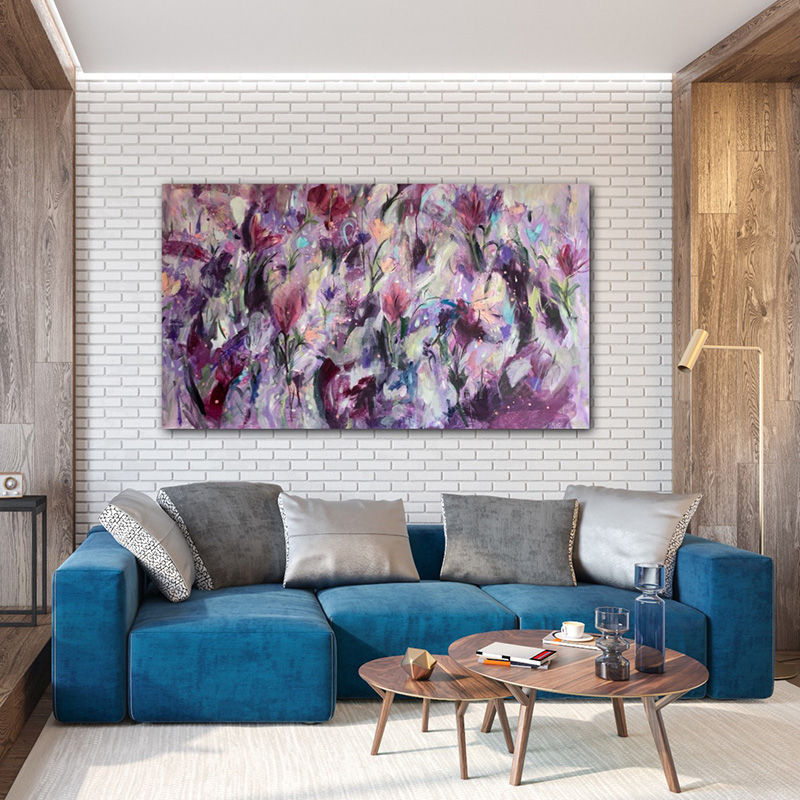
Prints of original paintings are an affordable option if original is out of reach Original Abstract Painting is vibrant wit lots of texture
Why unique art pieces create a stronger personal connection
People often remember where they found an original artwork, what drew them to it, and why they chose it. That sense of personal connection is one of the most enduring reasons to buy original art instead of a print. The piece becomes associated with a moment in your life, your taste, and your way of seeing the world.
Owning art in this way is not about prestige. It is about intimacy. Original works tend to feel more meaningful because they are singular. They are not one of many identical copies distributed into countless homes. They belong to a more personal relationship between artist, artwork, and collector.
For that reason, many people seeking a home that feels considered rather than assembled look for unique art pieces that reflect their own sensibility. The right work can become part of family memory, a conversation starter, or simply a source of quiet pleasure that deepens over time.
This is especially true when art is chosen slowly and instinctively. A work you return to again and again usually tells you something about yourself. Prints can be attractive and accessible, but originals often hold emotional weight in a different category altogether.
Original art vs prints: a practical comparison
Choosing between an original and a print does not need to be framed as right or wrong. It is more useful to understand what each offers. Prints can be a practical option for certain spaces or budgets, while original art brings qualities that are difficult to substitute.
Aspect | Original Art | Prints |
Uniqueness | One of a kind, with individual marks and variations | Reproduced from an existing image |
Surface and texture | Visible depth, material detail, and physical presence | Generally flatter, even when high quality |
Emotional connection | Often stronger because the work is singular | Can be visually pleasing but usually less personal |
Decor impact | Acts as a focal point and brings character to a room | Works well for consistency and broad styling |
Gifting value | Thoughtful, memorable, and deeply personal | Accessible and easy to match to many interiors |
For buyers who want more than a wall covering, original art usually offers the richer experience. It invites closer attention and tends to reward long-term living. The work does not become familiar in a dull way; instead, new details keep revealing themselves.
What to look for when buying original artwork
If you are considering an original piece, it helps to move beyond the idea of matching a sofa or filling an empty wall. The best choices usually come from a mix of instinct and observation.
Notice what holds your attention. If a work keeps drawing you back, that is worth taking seriously.
Look closely at the surface. Texture, brushwork, line, and colour relationships often matter more in person than on screen.
Think about mood, not just palette. Ask how the piece makes the room feel, not only whether it matches.
Consider scale carefully. A smaller original can have enormous presence if the composition is strong.
Buy from artists or galleries whose work feels consistent and sincere. A clear artistic voice usually translates into work with staying power.
For collectors who want to buy original artwork online without losing that sense of connection, it helps to spend time with an artist's wider body of work. Sandra Vincent's collection is a good example of how original art can feel both distinctive and approachable, offering pieces that bring colour, atmosphere, and individuality into everyday interiors.
The lasting value of choosing original art
Original art asks for a little more thought than buying a print, but it gives more back in return. It brings physical richness, individuality, and a sense of authorship that reproductions rarely match. Over time, that difference becomes even more meaningful. A print may remain attractive, but an original often becomes more integrated into the life of a home.
There is also something quietly affirming about living with work that was genuinely made, not merely reproduced. It reflects care, attention, and creative labour. In a world full of repeated images, choosing original art is a way to live with something more personal and more lasting.
If your goal is to create a home with character rather than sameness, unique art pieces are often the most rewarding choice. They do more than complete a wall. They shape mood, express identity, and stay relevant long after trends have moved on.

Comments