
Top Tips for Selecting Art That Resonates with Your Story

Art has the power to do more than complete a room. Selecting the right art piece for you can hold memory, suggest atmosphere, and mirror something personal that words cannot fully express. That is why choosing art should never feel like a rushed styling decision. Whether you are buying your first original work or adding to a growing collection, browsing an art gallery online can be a thoughtful way to discover pieces that feel deeply aligned with your life, taste, and sense of home.
Begin with your story, not the trend cycle.
Selecting the right art for you
The strongest art choices often start with reflection rather than decoration. Before thinking about colour palettes or wall measurements, consider what you want the piece to evoke. Some people are drawn to art that captures a sense of calm. Others prefer movement, tension, nostalgia, or a feeling of optimism. The work that resonates most is usually the work that speaks to your inner landscape.
A useful starting point is to think about the places, memories, and experiences that stay with you. Coastal light, a city horizon, native landscape tones, family rituals, or simply a preference for spaciousness and texture can all inform your response to art. Abstract work is especially powerful here because it leaves room for interpretation. Rather than telling you exactly what to see, it invites you to find your own meaning in it.
When you view several works together, notice which one continues to hold your attention. Not the one you think you should like, but the one you keep returning to. That instinct matters. Art chosen from genuine connection tends to stay relevant long after interiors and trends shift.
Consider how the artwork will live in your space
Once you have a sense of emotional direction, bring the practical context into focus. Art does not exist in isolation. It lives with furniture, natural light, architecture, and the rhythms of daily life. A painting in a quiet bedroom may need a different energy from one placed in an open-plan living area or an entryway that sets the tone for the whole home.
Think about the mood of the room first. A restful space may suit layered neutrals, softer transitions, and atmospheric forms. A social space can often carry bolder contrast, stronger gesture, or larger scale. If the room already contains a lot of visual detail, a work with clarity and restraint may create balance. If the room feels too controlled, a more expressive piece can bring warmth and personality.
It also helps to think about viewing distance. A corridor or stair landing is experienced in passing, so impact and composition matter immediately. A dining room or sitting room allows for slower engagement, where detail, texture, and subtle shifts in colour can unfold over time.
Entryway: choose work that introduces mood and character.
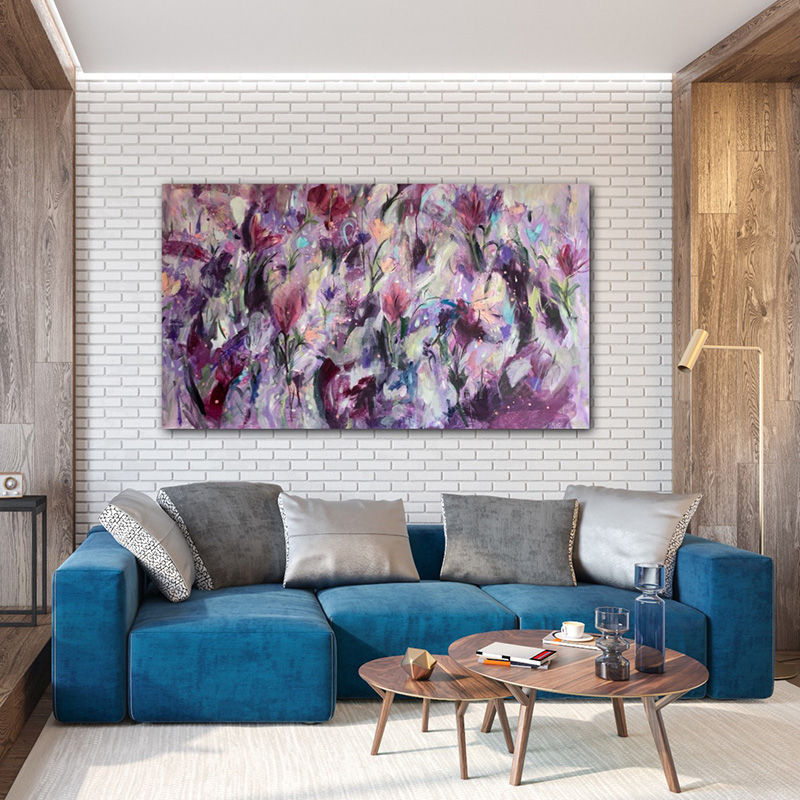
Living room: look for a piece that can hold visual weight and conversation.
Bedroom: prioritise calm, depth, and emotional ease.
Study: select art that supports focus without feeling sterile.

Use scale, colour, and composition to make the connection feel complete
Even highly personal art needs the right physical presence to feel resolved in a space. One of the most common mistakes is choosing a work that is too small for the wall or too timid for the furniture beneath it. Scale should feel intentional. Art does not always need to dominate, but it should look grounded and confident where it hangs.
Colour is equally important, though not in a simplistic match-the-cushions sense. The most sophisticated interiors often echo a tone rather than repeat it exactly. A painting might pick up the warmth of timber, the coolness of stone, or a note already found in textiles, ceramics, or natural light. Contrast can also be effective when used deliberately, especially if the artwork becomes the focal point that energises the room.
Element | What to Ask | Why It Matters |
Scale | Does the work feel proportionate to the wall and furniture? | Proper scale creates balance and presence. |
Colour | Does it echo or intelligently contrast the room? | Colour shapes mood and visual cohesion. |
Composition | Does the movement feel calm, dynamic, spacious, or dense? | Composition influences emotional response. |
Texture | Will surface detail add depth in the available light? | Texture can change how a piece feels throughout the day. |
If you are deciding between several works, compare them in terms of emotional effect as much as appearance. Ask yourself which one you would still want to live with in five years. That question often cuts through uncertainty very quickly.
How to buy thoughtfully from an art gallery online
A well-curated art gallery online gives you time and space to look carefully, revisit favourites, and compare works without pressure. The key is to approach the process with the same attentiveness you would bring to a physical gallery visit.
Study the artwork in detail. Look at composition, edges, texture, and tonal variation, not just the thumbnail image.
Check dimensions carefully. Measure your wall and map out the size with tape if needed.
Read the artist's perspective. Materials, inspiration, and process often deepen your connection to the work.
Think about framing or presentation. The finish should support the character of the piece and the room.
Give yourself a second look. If a work continues to feel compelling after a few days, that is often a good sign.
For those drawn to original abstract art Australia has a vibrant culture of artists whose work reflects atmosphere, landscape, and emotional subtlety in distinctive ways. Sandra Vincent Art Melbourne is a strong example of this sensibility, offering original abstract pieces that feel considered, expressive, and designed to be lived with rather than simply admired in passing. For buyers who value personal connection in art, that quiet depth matters.
Choose art that leaves room for you
The most lasting artwork is rarely the piece that explains everything at once. It is the piece that continues to unfold as your life changes around it. A good painting can meet you differently over time: energising in one season, comforting in another, and always retaining a sense of presence that justifies its place in your home.
That is why patience is part of good collecting. You do not need to fill every blank wall immediately. It is better to wait for a work that feels true than to settle for one that is merely convenient. Art should carry a pulse of recognition. When it does, the room feels more complete, but so do you.
In the end, selecting art that resonates with your story is about trusting both instinct and observation. Pay attention to emotion, scale, and setting. Let the work speak before you overanalyse it. When chosen with care, an art gallery online becomes more than a place to browse; it becomes a way to find original work that reflects who you are and how you want to live.

Comments