
How to Create a Gallery Wall with Sandra Vincent's Art

Updated: May 17
A gallery wall should feel collected, not crowded; expressive, not accidental. The best ones reveal something about the people who live with them, using colour, texture, scale, and spacing to create a sense of rhythm across a room. When you begin with unique art pieces rather than generic décor, the result has far more depth and character, especially when the artwork carries a distinct point of view.
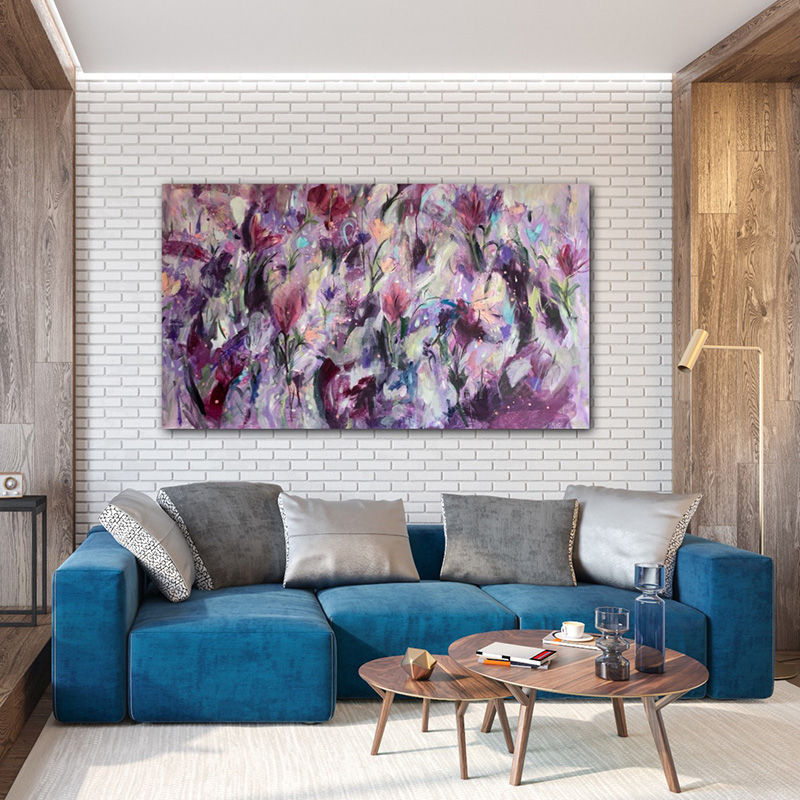
Sandra Vincent's work lends itself beautifully to this kind of display. Her paintings bring movement, atmosphere, and a strong visual identity that can anchor a hallway, living room, bedroom, or stairwell without making the arrangement feel rigid. If you are planning a gallery wall that feels thoughtful and lived-in, the key is to build around the art rather than treating the art as an afterthought.
Start with the mood of the room
Before choosing frames or reaching for a hammer, decide what the wall should contribute to the space. A gallery wall in a dining room may invite warmth and conversation, while one in a bedroom may need a softer, more restful tone. This first decision helps narrow your choices and prevents the common mistake of combining pieces that are individually attractive but collectively disconnected.
Look closely at the room's existing elements: upholstery, timber tones, rugs, paint colour, and natural light. Sandra Vincent Art | Original Australian Artwork Online is especially useful for homeowners who want work that feels expressive yet refined, because the artwork can be selected to echo a room's palette without disappearing into it. In a neutral interior, a more vibrant composition can become the focal point. In a colourful room, choose pieces that repeat one or two dominant tones so the wall feels cohesive.
For calm interiors: choose art with gentle tonal variation and fewer competing colours.
For energetic spaces: mix bolder pieces with quieter supporting works.
For transitional areas: use a tighter palette and stronger shapes to create instant impact.
Choose art with cohesion and contrast
A strong gallery wall is not about matching everything. It is about finding a relationship between the pieces. That relationship may come from colour, subject, brushwork, scale, or emotional tone. Sandra Vincent's work often has enough visual personality to stand alone, but it also layers well when grouped with smaller companion works, sketches, or textural pieces.
When sourcing unique art pieces, it helps to think in terms of one lead work and several supporting works. The lead piece is the visual anchor. It may be the largest painting, the most detailed composition, or simply the one with the strongest colour presence. Supporting works should not compete with it; they should extend the story.
A useful approach is to create a mix like this:
One hero piece that sets the tone.
Two to three medium works that repeat key colours or textures.
One or two smaller pieces that provide breathing room and variation.
This gives the wall structure while still allowing it to feel organic. If every piece is the same size or intensity, the arrangement can feel flat. If every piece is dramatically different, it can feel chaotic. The sweet spot is contrast with a thread of continuity.
Plan the layout before hanging
The layout stage is where a gallery wall either gains confidence or loses it. Start by measuring the wall and marking out the overall footprint you want the arrangement to occupy. Then place the artworks on the floor and experiment before making any holes. This makes it easier to judge balance, spacing, and eye movement across the grouping.
There are two dependable layout styles:
Structured: works align along clear top or side lines, ideal for more formal spaces.
Organic: the outer edges are irregular, but spacing remains consistent, ideal for relaxed interiors.
For most homes, an organic layout feels more natural with original art. Begin with the largest piece near the centre, then build outward. Step back often. If one side feels heavier, shift a darker or larger work across the arrangement rather than adding more art immediately.
As a general rule, keep spacing visually consistent. Pieces do not need identical gaps, but they should feel intentionally related. If the gaps swing from very tight to very wide without reason, the wall can start to feel unsettled.
Quick planning checklist:
Measure the wall before selecting final placements.
Lay everything out on the floor first.
Start with the largest or most commanding artwork.
Keep the centre of the arrangement close to eye level.
Check balance from different points in the room.
Use framing, spacing, and surrounding objects to create rhythm
Framing has a major influence on the finished result. If the artwork is expressive and textural, simple frames often allow the work to breathe. If the room is minimal, a more substantial frame can give the arrangement presence. You do not need every frame to match exactly, but there should be a logic to the selection. For example, natural timber, white, black, or brushed metallic finishes can all work well if repeated with purpose.
Spacing is equally important. Tight spacing creates intensity and works well when you want the wall to read as one visual statement. Wider spacing gives each artwork more independence and suits rooms where a quieter effect is needed. In either case, the wall should relate to nearby furniture. A gallery wall above a sofa, console, or bed looks most grounded when it is visually anchored to that piece below it, rather than floating too high.
Consider, too, what lives around the gallery wall. A lamp, chair, ceramic object, or leafy branch can echo the colours and shapes within the art, helping the display feel integrated into the room rather than isolated on the wall.
Let the gallery wall evolve over time
The most compelling gallery walls rarely arrive fully formed in a single afternoon. They develop through editing, small refinements, and a willingness to live with the arrangement for a while. You may discover that one painting belongs elsewhere, that a frame finish feels too heavy, or that the wall needs one quieter piece to soften the whole composition. That is not failure; it is part of the process of making the display personal.
With Sandra Vincent's art, this gradual approach works especially well because the pieces have enough individuality to stand on their own while still contributing to a larger visual conversation. That makes it easier to start with a few works and expand later without losing coherence.
In the end, a memorable gallery wall is not built by filling space. It is built by choosing art with intention and giving it room to resonate. When you begin with unique art pieces and arrange them with care, your wall becomes more than decoration; it becomes a lived expression of taste, mood, and home. Sandra Vincent's work offers a strong foundation for that kind of collection, bringing originality and quiet confidence to every room it enters.



Comments