
Finding Your Style: A Guide to Selecting Art That Resonates

Choosing art for your home is not simply a decorative decision. The right piece can alter the atmosphere of a room, sharpen your sense of place, and create a connection that deepens over time. Yet many people feel uncertain about where to begin, especially when browsing an art gallery online, where the choice can seem endless. The key is not to search for what is fashionable or universally approved, but to identify what genuinely holds your attention and continues to feel meaningful after the first glance.

Begin with response, not rules
Your first instinct is often more revealing than you think. Before considering whether a work matches your sofa, fits a trend, or seems like a sensible purchase, ask yourself a simpler question: do I want to keep looking at it? Art that resonates usually has an emotional pull. It may feel calming, energising, contemplative, or slightly mysterious. Whatever the reaction, it should feel distinct.
This is particularly important with abstract work. Abstract art does not tell you exactly what to see, which is why it can live with you so well. It leaves room for mood, memory, and interpretation. If a painting draws you in without needing explanation, that is often a stronger sign of suitability than any design rule.
When browsing a curated art gallery online, slow down enough to notice which pieces stay with you after you have closed the page. That lingering effect matters. For collectors interested in original abstract art in Australia, Sandra Vincent Art Melbourne offers the kind of painterly depth and tonal sensitivity that rewards repeated viewing rather than instant, passing appeal.
Look at how the work will live in your space
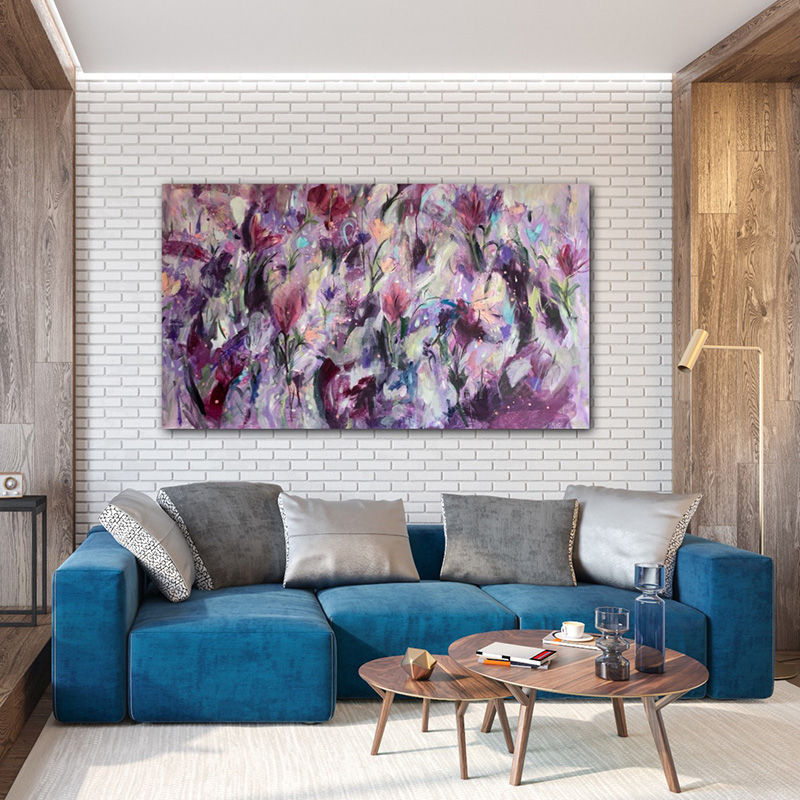
Art does not need to match a room perfectly, but it should converse with it. A thoughtful choice considers scale, colour temperature, visual weight, and the rhythm of daily life around the piece. A large, atmospheric canvas can anchor a room and create a sense of calm, while a smaller, more intricate work may be better suited to intimate spaces where it can be viewed closely.
Consider these practical points before you decide
Scale: Measure your wall and compare it with the artwork dimensions. A piece that looks substantial on screen may read much smaller in person.
Palette: Look for colour relationships rather than exact matches. Echoing a tone already present in the room often feels more refined than strict coordination.
Light: Natural light, warm lamps, and shadow all affect how colour is perceived throughout the day.
Viewing distance: Some works need space to breathe; others reveal their character only up close.
Emotional setting: Think about the mood you want in that room. Restful spaces often suit layered, quieter compositions, while active rooms can carry bolder energy.
One useful approach is to stand where the artwork will be placed and imagine what you want that wall to contribute. Do you want stillness, movement, warmth, sophistication, or contrast? Art becomes easier to choose when you define the role it will play.
Learn how to assess quality in an art gallery online
Buying from an art gallery online requires a more attentive eye, but it can also be a very considered way to collect. Good presentation helps, yet the most important task is learning what details matter. Look beyond the first image and read carefully.
What to check | Why it matters |
Dimensions | They determine presence, proportion, and whether the work will suit the intended wall. |
Medium and surface | Texture, layering, and material quality affect how the work feels in person. |
Close-up images | These reveal brushwork, tonal shifts, edges, and finer details not visible in a full shot. |
Framing or presentation | Knowing whether a work is stretched, framed, or ready to hang avoids uncertainty later. |
Artist consistency | A cohesive body of work often signals a developed visual language rather than novelty. |
It is also worth paying attention to whether the work appears to have depth beyond the screen. Strong original paintings often show subtle variation in mark-making, layering, and finish. They carry a physical presence that reproductions or purely decorative pieces tend to lack.
Finding your style in abstract art
If you are still defining your taste, begin by noticing patterns in what you repeatedly save, revisit, or admire. Over time, preferences become clearer. You may be drawn to earth-based palettes, bold gestural movement, minimal compositions, or richly layered surfaces. Style is rarely discovered in one dramatic moment; it is usually recognised through repetition.
Review your instinctive choices. Gather a small selection of works you are naturally drawn to without overthinking.
Identify common threads. Notice recurring colours, moods, levels of intensity, or compositional styles.
Decide what you want to feel. The best art choices often reflect emotional intention as much as aesthetics.
Choose depth over novelty. A piece that continues to unfold is usually a wiser choice than one that only makes a quick impression.
This is where original abstract art can be especially rewarding. Its value lies not only in visual impact, but in its ability to remain open. A strong abstract painting may read one way in the morning, another in evening light, and another again after months of living with it. That shifting relationship is part of what makes collecting art so personal.
Make the final decision with confidence
Once you have found a work that feels right, resist the urge to overcomplicate the choice. Practical considerations matter, but they should support conviction, not replace it. If a piece suits the scale of your room, aligns with the atmosphere you want, and keeps drawing you back, you may already have your answer.
There is no perfect formula for selecting art, and that is part of its appeal. The most memorable interiors are rarely built from safe, interchangeable choices. They are shaped by works with presence, character, and emotional truth. Whether you are purchasing your first piece or adding to a growing collection, browsing an art gallery online can be an elegant and rewarding way to discover art that reflects your sensibility.
Ultimately, finding your style means learning to trust your eye. The right artwork will not merely fill a wall; it will bring a room into focus and make it feel more like your own. When approached thoughtfully, an art gallery online becomes less a place of endless options and more a place of recognition, where the work that resonates begins to feel unmistakably yours.

Comments