
Creating a Balanced Art Collection: Tips from Sandra Vincent

Updated: May 7
A well-balanced art collection does more than fill walls. It gives a home rhythm, personality, and a sense of quiet confidence. The best collections are rarely built by chasing trends or matching everything perfectly; they come together through thoughtful choices in colour, scale, mood, and placement. When collectors take time to understand what balance really looks like, acrylic abstract paintings can become a powerful part of a home that feels both curated and deeply individual.
What balance really means in an art collection
Balance in art collecting is not about strict symmetry or buying pieces that all look the same. It is about creating a visual conversation between works so that no single piece feels isolated and no room feels overloaded. A balanced collection has variation, but it also has continuity. That continuity may come from a recurring palette, a shared emotional tone, a similar approach to texture, or a consistent level of visual energy.
This is often where collectors hesitate. They worry that mixing styles will make a space feel disjointed, or that choosing bold work will overwhelm quieter interiors. In practice, balance comes from contrast handled with intention. A dramatic canvas can sit beautifully beside calmer works if scale and spacing are right. A soft, tonal arrangement can still feel lively if one statement piece introduces movement or depth.
At Sandra Vincent Art | Original Australian Artwork Online, this idea of balance is especially relevant for buyers who want work that feels expressive but still easy to live with over time. The goal is not to assemble a showroom wall. It is to create a collection that reflects the way you want your home to feel.
Start with anchor pieces, then build rhythm around them
One of the simplest ways to create harmony is to begin with one or two anchor artworks. These are the pieces that establish the tone of the collection. They may be larger in scale, stronger in colour, or more emotionally resonant than the surrounding works. Once those anchors are in place, supporting pieces can add pacing and variation rather than competing for attention.
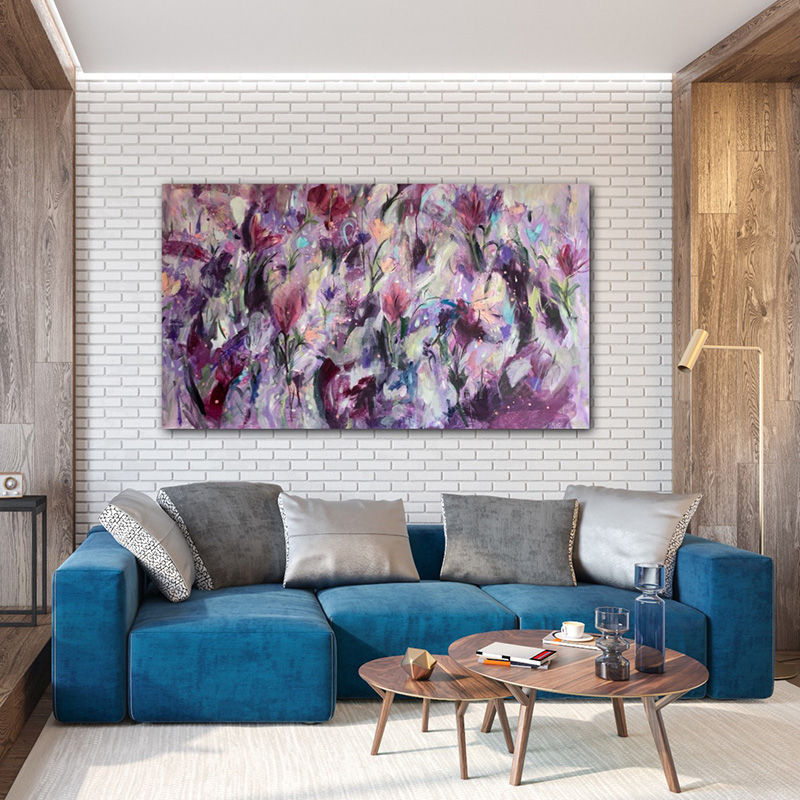
For collectors drawn to colour and gesture, acrylic abstract paintings can act as the thread that ties different rooms, moods, and scales together. Their layered surfaces and fluid mark-making often bring movement into a space without requiring the rest of the room to be visually busy.
When choosing anchor pieces, consider the following:
Scale: Larger works can ground open walls or major living spaces.
Palette: A dominant artwork can introduce colours that reappear subtly elsewhere.
Energy: Some paintings feel contemplative, while others feel dynamic; knowing which mood you want matters.
Placement: The strongest work should usually be given room to breathe rather than crowded by smaller pieces.
After anchors are chosen, rhythm becomes important. Rhythm is created by repeating certain visual cues across a home. That might mean echoing a rust tone from a living room artwork in a hallway piece, or balancing an energetic abstract in one area with a quieter painting in the next room.
Use colour, texture, and subject matter with restraint
A collection feels elevated when it has enough variety to stay interesting and enough restraint to feel coherent. This is where many collectors benefit from stepping back and viewing the home as a whole rather than styling each room in isolation.
If you love abstract work, avoid assuming every piece must be equally bold. A more successful approach is to vary the intensity. One room may hold a high-impact painting with strong movement, while another may benefit from softer layering or more open composition. Texture also plays a major role. Acrylic works can bring depth through washes, thick passages, scraping, and translucency, which means even a limited palette can still feel rich and engaging.
Element | What to Aim For | What to Avoid |
Colour | Repeated tones across different works | Too many unrelated palettes competing |
Scale | A mix of statement and supporting pieces | All works the same size |
Texture | Layered surfaces that add depth | Overloading every wall with high-intensity detail |
Spacing | Breathing room around key pieces | Crowded hanging arrangements without hierarchy |
Mood | A clear emotional thread from room to room | Sharp shifts that feel accidental |
Subject matter matters too, even in abstract-led collections. If you are mixing abstract pieces with landscape, botanical, or figurative work, look for links in tone or composition rather than obvious matching. A collection can be diverse and still feel whole.
Edit your walls as carefully as you choose your art
Balanced collecting is as much about editing as it is about acquiring. An artwork can be beautiful on its own and still not be right for a particular space. Placement changes how a piece is perceived: ceiling height, natural light, furniture lines, and neighbouring works all affect its impact.
Before hanging or purchasing, it helps to think through a simple checklist:
Measure the wall first. This reduces the common mistake of buying pieces that are too small for the space.
Identify the viewing distance. A work seen from across an open-plan area needs different presence from one in a narrow hallway.
Consider negative space. Empty wall space is not wasted; it helps important pieces stand out.
Group with intention. If creating a salon hang or pair, let one piece lead and let the others support.
Live with choices before finalising. Lean works against walls for a few days to assess how they feel in shifting light.
This process often reveals that balance is not about adding more art. Sometimes it means choosing fewer, stronger pieces and allowing them to hold the room with confidence.
Buy with intention and let the collection evolve
The most compelling collections are built gradually. They reflect changing taste, lived experience, and a growing understanding of what resonates on a lasting level. Instead of trying to complete every room at once, focus on choosing work that continues to reward attention. A collection should feel layered, not rushed.
This is especially true with acrylic abstract paintings, which can reveal different qualities over time depending on season, light, and context. What first reads as colour may later feel like atmosphere. What begins as a focal point may become the work that quietly stabilises the room.
Collectors often make their best decisions when they ask a few practical questions before buying:
Does this piece add something new without breaking the overall harmony?
Can it connect visually or emotionally with work I already own?
Will I still want to live with this when the novelty fades?
Is this a statement piece, or a supporting piece my collection genuinely needs?
Creating a balanced collection is ultimately an exercise in discernment. It is about knowing when to introduce energy, when to soften it, and when to stop. Sandra Vincent’s approach offers a useful reminder that good collecting is not about perfection. It is about building an environment that feels considered, expressive, and true to the people who live in it. When chosen with care, acrylic abstract paintings bring colour, movement, and emotional depth to a home, helping a collection feel not only complete, but alive.

Comments