
Case Study: How Original Art Changed One Home's Atmosphere

Updated: May 17
A room can be beautifully furnished and still feel incomplete. Good lighting, comfortable seating, quality materials, and a calm palette all matter, yet none of them automatically create emotional depth. That final shift often comes from art. In interiors that feel orderly but slightly impersonal, unique art pieces can change the atmosphere with remarkable clarity, bringing focus, warmth, and a stronger sense of identity to the home as a whole.
The Starting Point: A Home That Looked Finished but Felt Flat. How art can change your homes atmosphere
This case-study approach reflects a familiar situation rather than a dramatic makeover story. Imagine a well-designed home with neutral walls, natural textures, and thoughtful furniture placement. Everything is technically in place, but the rooms do not quite hold attention. The eye moves across surfaces easily enough, yet nowhere lingers. The mood is pleasant, though not memorable.
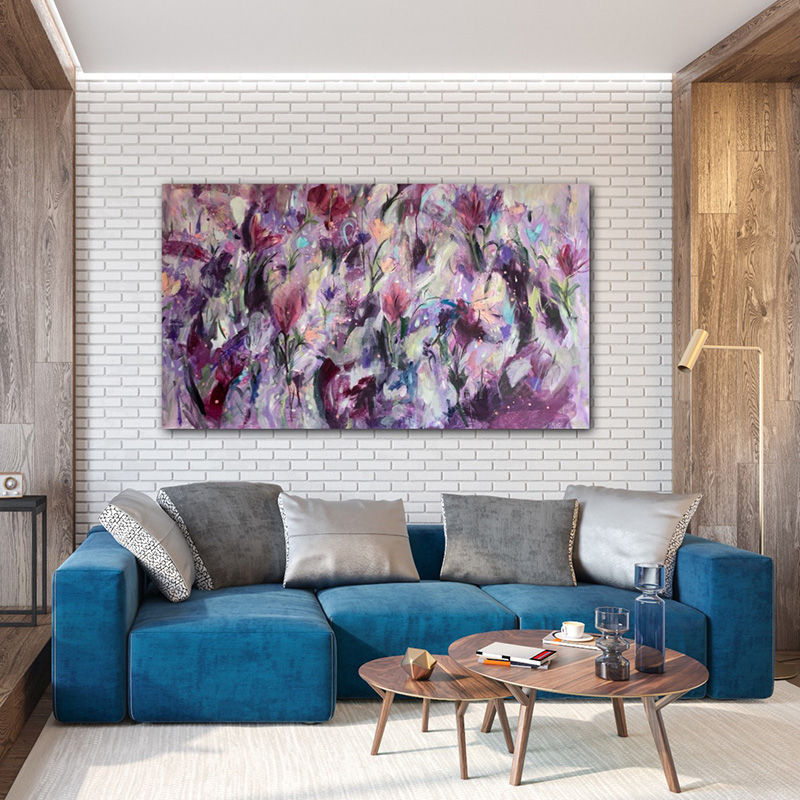
That kind of interior often needs more than another cushion, lamp, or decorative object. It needs a visual anchor. Original art does not simply fill empty wall space; it changes how the room is read. Suddenly, colour has context. Negative space becomes intentional. Furniture arrangements feel connected rather than separate. Even silence in the room can feel different, because the atmosphere has acquired a centre of gravity.
In many homes, the shift begins when owners stop asking what will match and start asking what will resonate. That is the point at which art becomes more than decoration and starts shaping the emotional life of the interior.

What Original Art Changed First
The first change is usually visual rhythm. A room without art can feel static, especially if it relies on safe tones and predictable lines. Original work introduces movement, depth, and contrast. In an abstract piece, that may come through layered brushwork, tonal variation, or the tension between soft and assertive forms. These qualities help a room feel less staged and more alive.
The second change is emotional temperature. Some works quiet a room. Others energise it. The important point is not whether the art is bold or restrained, but whether it adds feeling. That is why original work often has a stronger effect than mass-produced imagery. It carries evidence of decision-making, gesture, and material presence, and those qualities subtly alter how a space is experienced.
Aspect of the room | Before original art | After original art |
Focal point | Unclear or dispersed | Defined and intentional |
Colour relationships | Pleasant but disconnected | More cohesive and responsive |
Sense of depth | Flat or purely functional | Layered and visually engaging |
Emotional tone | Neutral, sometimes impersonal | Distinct, memorable, and lived-in |
Once that shift happens, the rest of the home often follows. Adjacent rooms feel more resolved, because the art has established a standard of presence. It becomes easier to edit the space, remove unnecessary styling, and let the strongest elements breathe.
Why Unique Art Pieces Affect Atmosphere More Deeply
There is a reason unique art pieces make such a noticeable difference. They introduce singularity. In a time when many interiors can begin to resemble one another, original art restores individuality. It suggests that the home has been shaped through feeling and judgment, not simply assembled from familiar formulas.
For homeowners looking beyond generic styling, unique art pieces often become the element that makes a space feel collected rather than assembled. They can hold complexity without creating clutter, especially in open-plan areas where a room needs definition but not heaviness.
This is particularly true of abstract work. Abstract art does not dictate a single narrative, which allows it to stay fresh in daily life. It can echo architecture, soften hard lines, or introduce contrast where a room feels overly controlled. In practical terms, it gives the interior a pulse. In emotional terms, it invites repeated looking, and that repeated looking is part of what makes a home feel inhabited in a deeper way.
Lessons for Choosing Art at Home
If there is one clear lesson from this kind of transformation, it is that art should be chosen for presence, not just palette. Homeowners often worry first about matching colours, but atmosphere is usually shaped more by scale, energy, and materiality than by exact coordination.
Begin with the mood you want. Decide whether the room should feel calm, expansive, intimate, grounded, or dynamic.
Choose scale with confidence. Art that is too small often weakens the room. One substantial work can do more than several hesitant ones.
Respect negative space. A strong piece needs visual breathing room to have its full effect.
Let texture matter. Surface variation, layering, and painterly depth can warm even the most minimal interior.
Buy what holds your attention. The right work keeps revealing itself over time, which is part of its value in a lived space.
These choices do not require a complete redesign. In fact, the most convincing homes are often the ones that do less, but choose better. Original art has a way of simplifying a room by giving it something meaningful to revolve around.
A More Personal Interior, Without Overdesigning It
One of the quiet strengths of original abstract art is that it can transform a room without overwhelming it. It does not need to explain itself, and it does not force a theme onto the home. Instead, it brings character, atmosphere, and visual confidence while still leaving space for everyday living. That balance is what makes it so effective in contemporary Australian interiors, where light, openness, and texture often play a central role.
For those seeking original abstract art in Australia, Sandra Vincent Art Melbourne offers work that sits naturally within this conversation. The appeal is subtle rather than overstated: pieces that can anchor a room, soften a pared-back space, or add depth to an already layered interior. In homes that want to feel personal rather than overstyled, that quality matters.
Ultimately, the transformation is not about making a room look more expensive or more finished. It is about making it feel more alive. When original art is chosen with care, the atmosphere of a home changes in ways that are both immediate and enduring. The right unique art pieces bring focus, emotion, and identity into the everyday, turning a competent interior into one that genuinely stays with you.

Comments